




This blog post has been revamped and updated for the latest 2023-2027 English study design.
Contents
1. What Is Text Response?
2. What Are You Expected To Cover? (Text Response Criteria)
3. School Assessed Coursework (SAC), Exams and Allocated Marks
4. How To Prepare for Your Text Response SAC and Exam
5. How To Write a Text Response
1. What Is Text Response?
In the study design, Text Response is officially known as ‘Reading and Exploring Texts’ in Year 11, and ‘Reading and Responding to Texts’ in Year 12. We’ll use the term Text Response throughout the blog to keep things simple.
Like its name, Text Response is when you respond to a text. The most popular texts are novels and films; however, plays, poetry, and short stories are also common. Your response will be in the form of an essay, in which you discuss themes, ideas and characters.
Recall all the novels and films you've studied since Year 7 (there'll be quite a few!). You should be very familiar with the process of watching a film or reading a novel, participating in class discussions about themes and characters, and finally, submitting an essay based on the text.
As you graduate into higher year levels, you spend each year revising and improving on your basic TEEL paragraph structure, learning to better incorporate quotes and formulating even more sophisticated essays than the year before (remember when you thought you couldn't possibly write an essay more than 500 words?).
The good news is, all of that learning is now funnelled into VCE’s Text Response, one of the three parts of the VCE English exam. The next section outlines the role Text Response plays in your SACs and final VCE exams. Let's get into it!
2. School Assessed Coursework (SAC), Exams and Allocated Marks
In Years 11 and 12, you’ll do Text Response twice each year. Most students will tackle their Text Responses in Terms 1 and 3.
Since your Year 11 results don’t count towards your final Study Score, below is a breakdown of the marks allocated to your Text Response SACs in Year 12.
For mainstream English students:
- Unit 3: 40 marks
- Unit 4: 40 marks
This means 40% of your School Assessed Score for Unit 3 comes from your Text Response SAC, and likewise, 40% of your School Assessed Score for Unit 4 comes from Text Response.
If you’re an EAL student, you will likely do more than one kind of assessment task for Text Response:
- Unit 3:
- 30 marks (for an analytical response to your text in written form)
- 20 marks (for comprehension of an audio/audio-visual text focused on historical, cultural, and/or social values in the text through either short-answer responses or note form summaries)
- Unit 4: 40 marks (for an analytical response to your text in written form)
This means that for EAL students, 50% of your School Assessed Score from Unit 3 comes from Text Responses, while 40% of your School Assessed Score for Unit 4 comes from Text Response.
The time allocated to your SAC is school-dependent. Often, schools use one or two class periods to conduct your SAC, depending on how long each of your periods lasts. VCAA suggests writing 700 to 900 words for your essays, but your teachers could ask you to write up to 1000 words. Keep in mind that it’s about quality, not quantity, but for anything internally marked, it’s important to keep your teacher’s preferences in mind!
In your exam, you get a whopping total of 3 hours to write 3 responses (Text Response, Creative and Language Analysis). The general suggestion is to spend 60 minutes on Text Response, but it is up to you exactly how much time you decide to dedicate to this section of the exam. Each section of the exam is worth a total of 20 marks.
3. What Are You Expected To Cover? (Text Response Criteria)
What are teachers and examiners expecting to see in your essays? Below are the VCE criteria for Text Response essays.
NOTE: Some schools may express the following points differently; however, they should all boil down to the same points - what is necessary in a Text Response essay.
a) Critically analyse texts and the ways in which authors construct meaning;
Much of the ‘meaning’ in a text comes instinctively to readers. Usually, you can automatically distinguish between a protagonist and an antagonist. You can often instinctively understand the key concerns, values or opinions the author is expressing, and whether or not the author is supporting or denouncing an idea.
In Text Response essays, you need to start looking at how the author constructs their texts and why they have made that choice. This means analysing the way authors construct meaning through their vocabulary, text structures, language features and conventions, and their presentation of ideas. For example, the author might describe a protagonist using words with positive connotations (kind, brave, charming), whereas the antagonist is described with words that convey negative connotations (vain, egocentric, selfish).
For example:
‘in Harry Potter, by describing the protagonist Harry as brave, the author JK Rowling exhibits the belief that possessing bravery when making tough choices or facing challenges is a strong and positive trait.'
b) Analyse the social, historical and/or cultural values embodied in texts;
Society, history and culture all shape and influence us in our beliefs and opinions about the world. In Text Responses, you’re aiming to understand the social and cultural values the author embeds in their text. This is so you can recognise how these elements influence the way a text is viewed by different audiences, and how the author intends to position their readers in different ways. When you understand the social, historical or cultural context the author is writing from, and the contexts the audience is reading from, you gain a much better understanding of the text as a whole, and you can appreciate the ideas the author is trying to convey on a much deeper level.
For example:
'through the guilty verdict of Tom Robinson in To Kill A Mockingbird, Harper Lee expresses the belief that the American legal system in the 1930s was not always fair or just.'
For more information on context and authorial intent in VCE English, read Interpreting Texts in VCE English: Context & Authorial Intent or What Is Authorial Intent in VCE English and Why Is It Important?
c) Discuss and compare possible interpretations of texts using evidence from the text;
Be open to the idea that many texts can be interpreted in many ways. Texts are rarely concrete and simple. Take The Bible, one of the most popular and famous books in history - it is interpreted differently by every person. Acknowledging more than one perspective on your text, or acknowledging that perhaps the writer is intentionally ambiguous, is a valuable skill that demonstrates you have developed a powerful insight into your text.
For example:
‘in The Thing Around Your Neck, feminist readers condone Adichie's stories, which all revolve around women either as protagonists or as narrators, giving voice to the disempowered gender in Nigerian society’.
d) Use appropriate metalanguage to construct a supported analysis of a text;
‘Metalanguage is language that describes language’. Like we mentioned before, the goal of a Text Response essay is to unpack not just what an author is saying but how and why they’re saying it. In your essays, you need to use appropriate terminology to discuss how the author has used language to convey meaning, and this is where metalanguage comes in.
Firstly, this means referring to language techniques, like metaphor, imagery or personification. It also means using terms that refer to the form or text structure the author has used to construct their text. You might discuss setting, characterisation or narrative voice. If you’re analysing a film, you would need to reference the director’s use of cinematic techniques, like camera angles, lighting, sound or mise-en-scène. Using appropriate metalanguage in your essays is essential.
For example:
'Malouf’s constant use of the present voice and the chapter divisions allow the metaphor of time to demonstrate the futility and omnipresence of war…'.
If you’re struggling to figure out how to incorporate metalanguage into your essays, it can be helpful to start by learning how to embed quotes in your essay.
For example:
'The personification of Achilles as "wolf, a violator of every law of men and gods", illustrates his descent from human to animal…’
To learn more about metalanguage, read our What Is Metalanguage? blog post. You can also check out our Metalanguage Word Bank for Texts and our Metalanguage Word Bank for Films.
e) Control and effectiveness of language use, as appropriate to the task
When examiners are marking essays, they are expected to churn through about 12-15 essays in an hour! This gives them approximately 5 minutes to read, get their head around, and grade your essay - not much time at all! You must use proper grammar and express your ideas clearly. If you use improper grammar or expression, you’re giving your marker an opportunity to take away marks because they’ll have to reread parts of your essay just to make sense of what you’re trying to say.
For further advice on the above criteria points, read Year 12: How To Turn Your Text Response Essays From Average to A+.
4. How To Prepare for Your Text Response SAC and Exam
Preparation is the primary factor that determines how well you’ll perform in your SACs and on your final exam. It doesn’t matter if you’re naturally gifted at English or if you’re the most skilled essay writer in the world - if you don’t prepare well enough for your exams, you won’t be able to reach your potential! That being said, different brains work differently, and it’s important that you put a bit of time into figuring out what study strategies work best for you. Here are our top strategies for Text Response preparation that can be done at any time of year (including holidays - see How To Recharge Your Motivation Over the School Holidays for more tips):
a) Reread your book (or rewatch the film)
After all the learning and discussion you’ve had with your teacher and peers, you should now have developed a solid foundation of knowledge. Rereading a book will help you refresh your memory, spot things you didn’t notice before, and most importantly, it’ll help you fill in any missing pieces. Take this as an opportunity to get familiar with the parts of the texts you're less confident in, to develop your quote bank or to examine particular themes you struggle with (HINT: A good place to start is to make sure you know the difference between themes, motifs and symbols!)
b) Do a close analysis
This is like an advanced version of rereading a book. A 'close analysis' - a term stolen from VCE Literature - is basically where you select a passage (a short chapter or a few pages), and analyse it in detail.
Whether or not you have time to reread your entire text, you can take your study to another level by doing a close analysis.
As you move through the passage, you can pick out interesting word choices made by the author and try to interpret why they have made this choice. Doing a close analysis will immensely strengthen your metalanguage analysis skills, and also give you the opportunity to stand out from other students because you can offer unique and original analysis and evidence in your essay. This can be a bit confusing, so the video below shows a full, close analysis of a Macbeth passage in action:
c) Read and watch our resources
Doing this study all by yourself can be rather daunting, so we've got your back. We specialise in supporting VCE English by creating helpful videos, study guides and ebooks. Here are some just to get you started:
YouTube Videos
We create general Text Response advice videos like this:
We also create text-specific videos:
And if you just need general study advice, we've got you covered too:
Check out our entire YouTube channel (and don't forget to subscribe for regular new videos!).
Study Guides
Our awesome team of English high-achievers have written up study guides based on popular VCE texts. Here's a compilation of all the ones we've covered so far:
After Darkness by Christine Piper
Chronicle of a Death Foretold by Gabriel Garcia Marquez
False Claims of Colonial Thieves by Charmaine Papertalk Green and John Kinsella
Go Went Gone by Jenny Erpenbeck
Like a House on Fire by Cate Kennedy
Like a House on Fire by Cate Kennedy (Close Analysis of ‘Cake’)
Measure for Measure by William Shakespeare
Measure for Measure by William Shakespeare (How To Write a Standout Essay)
Much Ado About Nothing by William Shakespeare
Old/New World Selected Poems by Peter Skrzynecki
On The Waterfront by Elia Kazan
Pride and Prejudice by Jane Austen
Rear Window by Alfred Hitchcock
Station Eleven by Emily St John Mandel
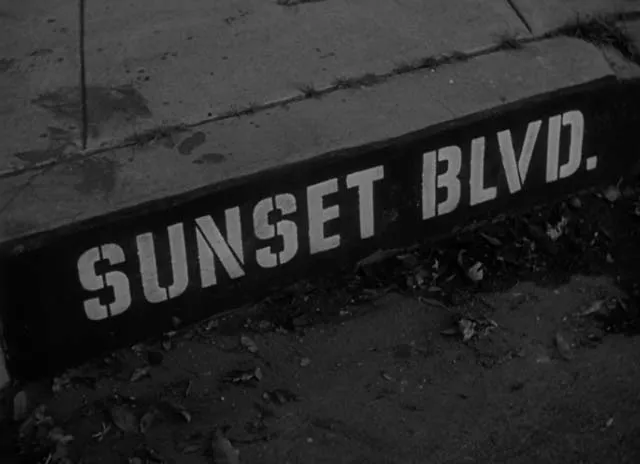
Sunset Boulevard by Billy Wilder (Analysis of Film Techniques)
Sunset Boulevard by Billy Wilder (Incorporating Cinematic Features into your VCE Essay)
The Crucible by Arthur Miller
The Complete Maus by Art Spiegelman
The Erratics by Vicki Laveau-Harvie (Setting)
The Erratics by Vicki Laveau-Harvie (Breakdown of Themes & Quotes)
The Golden Age by Joan London
The Great Gatsby by F. Scott Fitzgerald
The Lieutenant by Kate Grenville
The Memory Police by Yoko Ogawa
The Secret River by Kate Grenville
Things Fall Apart by Chinua Achebe
To Kill a Mockingbird by Harper Lee
We Have Always Lived in the Castle by Shirley Jackson
William Wordsworth: Poems Selected by Seamus Heaney
Women of Troy by Euripides (Don Taylor's version)
Year of Wonders by Geraldine Brooks
eBooks
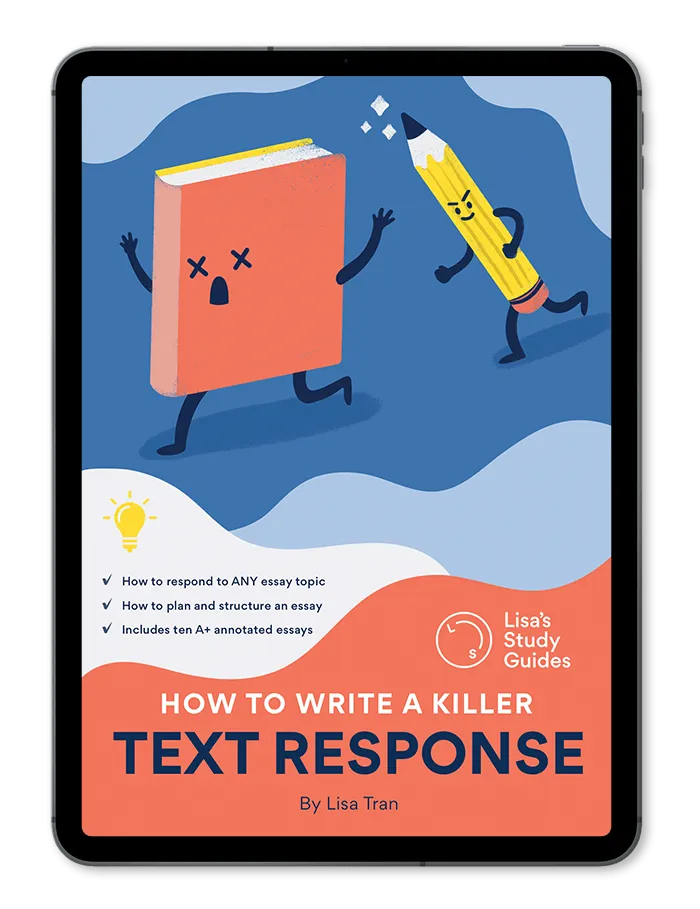
And if that isn't enough, I'd highly recommend our How To Write A Killer Text Response ebook.
Writing a good essay is challenging, and many students find this the hardest part of the Text Response. However, not enough students place emphasis on the brainstorming, preparation and planning of a Text Response essay! Your analysis, ideas and interpretations of your text actually matter just as much (if not more) than the sophistication of your writing.
Think about it - if you don't bring the best ideas to the table, then how can you expect your essay to achieve A+? Even if your essay is exceptionally well-written, if it doesn't answer the prompt, your teacher won't be sticking a smiley face on your work. I have no doubt you've heard, at least once, those dreaded teacher criticisms, 'you're not answering the prompt', 'you could've used a better example' or 'more in-depth analysis needed'.
Enter our golden strategy - the THINK and EXECUTE strategy. This is a strategy we’ve developed over more than a decade, and we’ve seen the thousands of students we’ve worked with improve their grades every time. The THINK and EXECUTE strategy breaks up the process of writing a Text Response essay into two parts - first the THINK, then the EXECUTE. Only with the unique THINK approach will you then be able to EXECUTE your essay to its maximum potential, allowing yourself to achieve those higher marks.
To learn more about the THINK and EXECUTE strategy, download our ebook sample on the shop page or check out the video below:
d) Get your hands on a range of essay prompts
Often, teachers will provide you with a list of prompts to practice before your SAC. Some teachers can be kind enough to nudge you in the direction of a particular prompt that may be on the SAC. If your teacher hasn’t distributed any, don’t be afraid to ask. You can also check out past VCE exam papers on the VCAA website.
We have a number of free essay prompts curated by our tutoring team, like this one: All the Light We Cannot See Essay Topics
Also, scroll back up to our list of study guides above, as many of those also have essay prompts included!
e) Brainstorm and write plans
Once you've done some preliminary revision, it's time to write some essay plans! We’re sure you know that planning your essay before you begin writing is essential. A clear plan helps you stay on topic and ensures your writing is focused and well-structured. This clarity is crucial to success in a Text Response essay.
If you’ve gotten your hands on some essay prompts, have a go at tackling as many as you can - create a plan for how you’d approach each one (this is where our THINK strategy will come in handy). Essay plans can be one of the most time-efficient ways of preparing for a Text Response SAC or exam! Rather than slaving away hours upon hours writing full essays, writing essay plans on a variety of topics will save you the burnout and get you feeling confident faster. Before you know it, you’ll know how to tackle any essay prompt that is thrown your way.
Here are some of the sample essay plans we’ve done - you’ll also find more essay plans in the blogs linked above and below (in the the Study Guides, essay prompt and Write essays sections):
Like a House on Fire Essay Topic Plan
The Handmaid's Tale Essay Topic Plan
We've curated essay topic breakdown videos based on specific VCE texts. In these videos, we explore keywords, ideas and how we’d plan an essay with corresponding examples/evidence.
f) Write essays
Yes, sad, but it’s a fact: practice makes perfect. Writers only get better by actually writing. Writing practice essays helps you develop the skills and thinking processes that allow you to set out your arguments logically, utilise important quotes and understand your text on a deeper level. Timing yourself and writing against the clock will also help you write faster – something that is a major problem for many students. With that said, let's get into how to write a Text Response next.
Take a look at some of the essays our tutoring team have written:
After Darkness Essay Topic Breakdown
All the Light We Cannot See Essay Topic Breakdown
Chronicle of a Death Foretold Essay Topic Breakdown
Extinction Essay Topic Breakdown
Like a House on Fire Essay Topic Breakdown
Station Eleven Essay Topic Breakdown
Women of Troy Essay Topic Breakdown
Wordsworth A+ Essay Topic Breakdown
If you want more sample essays, scroll back up to the Study Guides section as many of those have essays too!
If you need any more tips on how to learn your text in-depth, Steps for Success in Text Study provides a clear pathway for how to approach your text and is a must-read for VCE English students!
And, if you're studying a text you hate (ugh!), learn how to do well even when you don't like your text!
5. How To Write a Text Response
Before you start writing, make sure you're familiar with The Five Types of Text Response Prompts. Understanding the different types will help you move beyond a basic one-size-fits-all structure.
Introduction
In an introduction, you're expected to have the following:
- Context (or background)
- Author's name
- Title of text
- Contention
- Main arguments
Here’s an example from Wordsworth A+ Essay Topic Breakdown:
The Romantic Era saw poets honouring nature with a pantheistic reverence, encouraging active immersion in nature for its capacity to guide and elevate the mind of the poet. In William Wordsworth: Poems Selected by Seamus Heaney (2007), Wordsworth recounts his experiences in the natural world and reveals the joy this can bring, from both the immediate experience and greater solace gained from the recollection of memories in nature. Additionally, in light of the era’s increasing Industrialisation, Wordsworth draws upon mankind’s interaction with the natural landscape to lament over the degradation of morals while presenting nature as the antidote to mankind’s corrupted morals. Furthermore, the poet also focuses on the child’s experience and connection with nature as crucial to the development of one’s identity, while also alluding to the more spiritual connection man has with nature. Thus, it is in this myriad of experiences - physical, mental, emotional and even spiritual - that one is able to find greater meaning in existence and a guide to a more moral way of living.
Try to keep your introduction to the point. There's no need to prolong an introduction just to make a set number of sentences. It's always better to be concise and succinct, and then move into your main body paragraphs where the juicy content of your essay resides.
Body Paragraph
Most of you will be familiar with TEEL. TEEL can stand for:
- Topic sentence
- Example
- Evidence
- Linking sentence
If your teacher or school teaches you something slightly different - that's okay too. At the end of the day, the foundations are the same.
Here’s an example from Wordsworth A+ Essay Topic Breakdown:
Wordsworth’s poetry often recalls the poet's experiences within nature, presenting these moments as invaluable to one’s life. With glee and elation, the lyrical poem ‘I wandered as lonely as a cloud’ (1802) recounts one such occasion as the poet encounters a ‘host of golden daffodils…fluttering and dancing in the breeze’. The use of enjambment here, with the soft rhyming scheme, creates a dreamlike flow to the poem, which mimics the gentle movement of the daffodils. The regular ABABCC rhyming scheme also conveys the sense of astonishment the poet feels while in this moment of active immersion in nature, revealing the capacity of the beauty of the natural world to inspire joy from its ‘jocund company’. However, it is in viewing these moments in retrospect that Wordsworth suggests that one can gain greater value as it is these memories of ‘vacant or pensive mood…which is the bliss of solitude;/And then my heart with pleasure fills/And dances with the daffodils’ which reflects the Romantic view that moments of thoughtful solitude should be pursued in order to realise the greater value of the natural world. This notion of the value nature provides is also echoed in the ballad, ‘The Tables Turned’ (1798), which presents a debate between two characters, Matthew and William, on whether knowledge can be gained from books or experiences in nature. This debate encompasses the poet's desire to convey the Romantic ideal of the importance of knowledge gained from physical experiences rather than that found from books, evident from the speaker’s command to ‘quit your books’ in order to ‘Clear your looks’ and clear your mind to fully immerse in nature. The full rhymes convey a definiteness in this idea of indulging in these active experiences in nature, as there is ‘more wisdom in it’ which also rejects the Neoclassical views and values on learning from books and gaining knowledge through science rather than experiences. Furthermore, Wordsworth also argues that nature is a more enjoyable teacher as reading is called a ‘dull and endless strife’ and he argues that one should ‘Let nature be your Teacher’ guiding you to the ‘sweet lore’ it can reveal. Ultimately, it is both the active experiences in nature and the recollection of the memories of these moments that Wordsworth suggests one should look to for knowledge, enlightenment and an elevated sense of joy and solace.
Conclusion
Conclusions should be short and sweet.
Here’s an example from Chronicle of a Death Foretold A+ Essay Topic Breakdown.
Garcia Marquez castigates Colombian society for their corruption of values, conveying that violent murder is an inevitability in a patriarchal society riddled with religious pollution and machismo ideals. By failing to give the reader a clear explanation of the events leading up to the murder of Santiago Nasar, or the extent to which certain characters are culpable, Garcia Marquez urges Colombian society to consider the destructive nature and potential consequences of their own behaviour.
Read our advice on 5 Tips for a Mic-Drop Worthy Essay Conclusion for more help with your conclusions.
That's it for the Ultimate Guide to VCE Text Response. Good luck!


.png)
.png)
.png)
.png)
.png)
.png)


.webp)
.webp)
.webp)
.webp)
.webp)
.webp)
.webp)
.webp)
.webp)
.webp)
.webp)

.jpg)

